



Picture a small biotech that has just finished Phase 1.
They’ve spent years developing a treatment and have finally tested it in humans. The early safety data is there, and now they need to answer the bigger questions: How well does it work? For which patients? At what dose? What should the next trial look like?
Answering those questions takes more clinical data. And generating that data gets expensive very quickly.
Phase 2 studies typically involve more patients and start looking for preliminary evidence of effectiveness, alongside continued safety monitoring. One analysis of industry-sponsored U.S. trials estimated average Phase 2 costs ranging from $15 million to $40 million, depending on the therapeutic area.[1]
For a small biotech, that usually means raising another round of capital. But the conversations with investors often come back to the same thing: show us more evidence.
And there’s the Catch-22.
You need capital to generate better clinical evidence, but better clinical evidence is often what makes it easier to raise that capital in the first place.
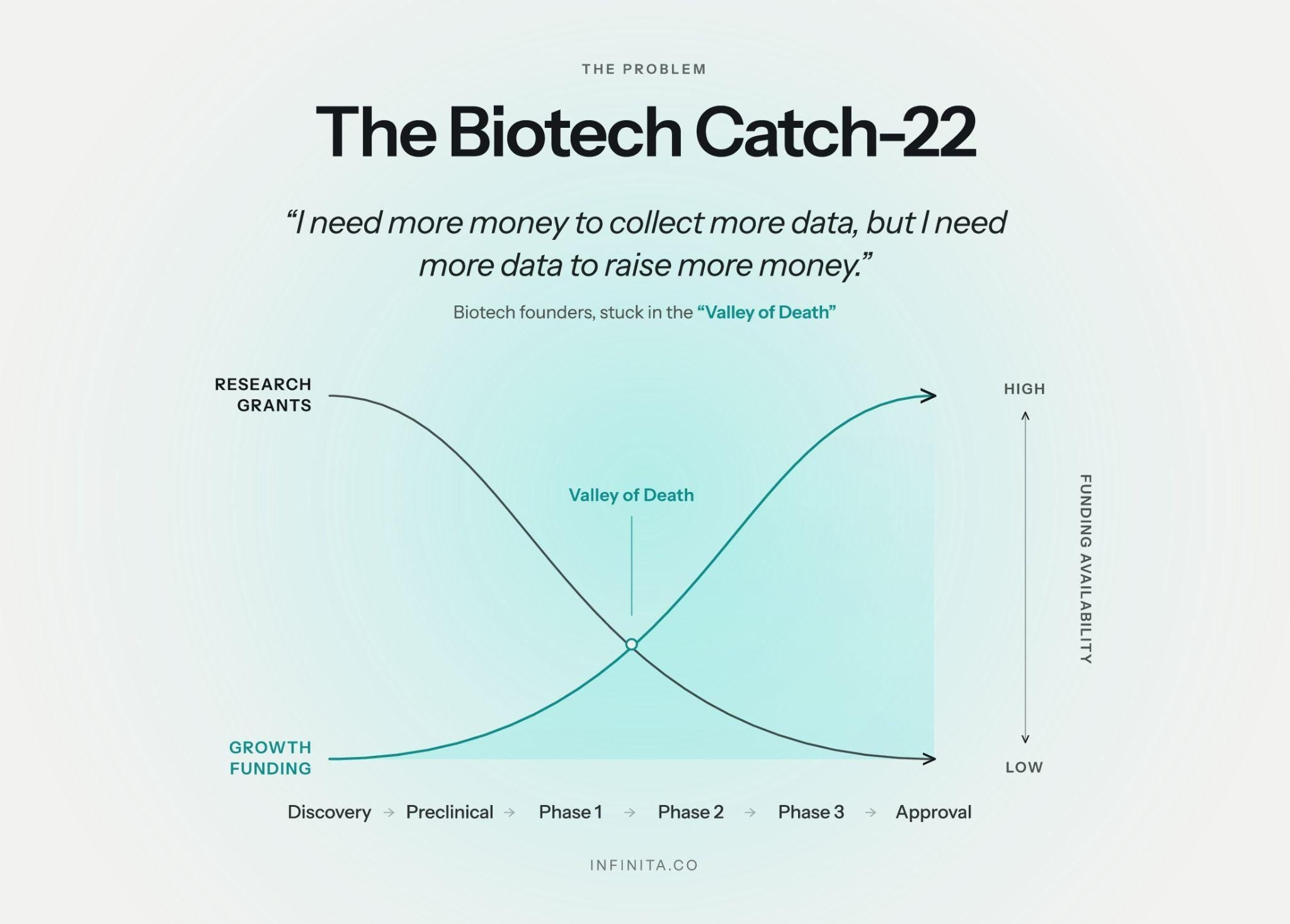
This matters because early-stage biotech development makes no revenue. It only has a cost for its research & development. It therefore depends on outside capital. This is a highly limiting model compared to any other industry, where it’s expected you show real customer demand and revenue.
What if treating patients could also help generate data?
Earlier clinical access introduces another possibility: an eligible post-Phase 1 treatment can be used in medical practice while the company continues its broader development path. If that clinical experience is collected systematically, it can generate additional data on patient selection, dosing, safety signals, treatment protocols, and outcomes, while also generating revenue from providing the treatment.
That changes the economics. Patient access, evidence generation, and revenue can happen alongside one another. The resulting data doesn’t replace controlled trials or automatically satisfy FDA requirements, but it can give the biotech additional evidence to work with as it designs those trials and continues development.
What changes in practice?
Let’s go back to that small biotech coming out of Phase 1.
The traditional development path is still there. The company may still need to raise capital, run Phase 2 and Phase 3 trials, and ultimately meet the FDA’s requirements for approval.
What changes is what can happen in the meantime.
Instead of waiting for the next financing round before generating more clinical evidence, earlier access creates another setting where eligible treatments can reach patients, generate data, and potentially generate revenue while development continues.
That’s the opportunity behind Montana’s model: not replacing the traditional clinical development pathway, but creating another way to keep generating evidence while a treatment is still moving through it.
See the Pathway in Practice
The Montana ETRB has already completed its first treatment protocol review under SB535.
Read About the First ETRB Approval →
Sources
[1] Sertkaya et al. (2016), Key Cost Drivers of Pharmaceutical Clinical Trials in the United States — PubMed